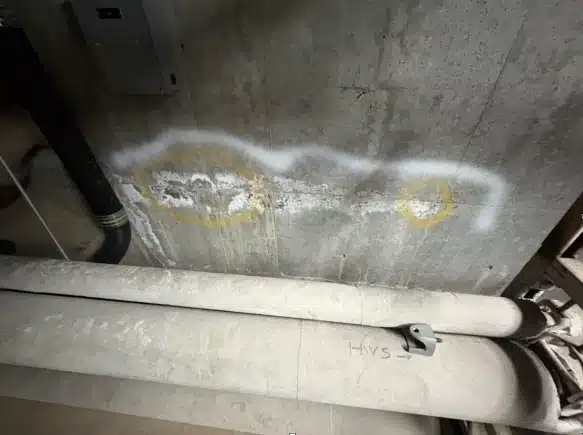
What winter may have left behind
Spring is when parking garages begin to show the effects of winter. Freeze-thaw cycles, road salts, and prolonged moisture exposure accelerate deterioration across concrete, coatings, and structural components.
Many of the conditions that develop over winter don’t become apparent until spring, when surfaces dry out and traffic patterns make problem areas more visible.
How deterioration develops over time in a parking garage
Parking structures are constantly exposed to traffic, moisture, and environmental stress. Over time, water infiltration begins to impact both surface conditions and structural components.
Left unaddressed, moisture penetrates deeper into the system, reinforcing steel corrodes, and concrete begins to break down, creating both performance and safety concerns.
1. Water infiltration or active leaks
Water is the primary driver of parking garage deterioration. Signs include dripping, staining, or white mineral deposits (efflorescence).
If water is entering the structure, it is already moving through the system and likely affecting areas beyond where it is visible.
2. Ponding or standing water
Water should not sit on a parking deck. Ponding typically indicates drainage issues, low spots, or failing coatings.
Standing water accelerates deterioration and increases the likelihood of leaks and structural damage.
3. Deteriorated or failing expansion joints
Expansion joints are designed to allow movement while keeping water out. When they fail, they become a direct path for water to reach structural components.
Cracking, separation, or visible wear are early indicators that repairs are needed.
4. Spalling or deteriorating concrete
Spalling appears as flaking, chipping, or crumbling concrete. It is often caused by moisture infiltration, corrosion of reinforcing steel, or freeze-thaw cycles.
Beyond aesthetics, spalling can create safety hazards and expose underlying structural elements.
5. Cracking or shifting surfaces
Cracks in the deck, walls, or structural elements allow water and contaminants to enter the system.
While some cracking is expected, widening cracks or shifting surfaces can indicate deeper structural concerns.
6. Exposed or corroding reinforcing steel
When reinforcing steel becomes visible or begins to rust, it is a sign that moisture has already penetrated the concrete.
As steel corrodes, it expands, accelerating deterioration of the surrounding concrete.
7. Safety hazards in pedestrian and traffic areas
Surface deterioration, uneven walking areas, and failing stair components can create safety risks for occupants and visitors.
These conditions are often overlooked but are critical indicators that the garage requires attention beyond routine maintenance.
Why early action matters
Parking garage deterioration does not improve on its own. The longer these conditions are left unaddressed, the more extensive and costly repairs become.
Industry studies show that early intervention and routine maintenance can significantly extend the service life of parking structures and reduce long-term repair costs.
What to evaluate next in your parking garage
If your facility is showing any of these signs, the next step is understanding how water is moving through the structure and where systems may be failing. Consider:
• Is water entering at one location but appearing elsewhere?
• Are joints, coatings, or transitions allowing moisture to pass through the system?
• Are repairs targeting the visible condition, or the point of entry?
• Are concealed systems, such as deck assemblies or below-grade conditions, contributing to the issue?
Planning ahead this season
Addressing garage deterioration requires more than isolated repairs. It requires understanding how coatings, joints, and structural components work together as a system.
Spring is the ideal time to assess conditions, plan repairs, and prioritize work before the construction season is fully underway.
Closing thoughts
Parking structures are one of the most heavily used and exposed components of a building. Maintaining them requires ongoing attention and a proactive approach.
By identifying early warning signs and addressing them before they escalate, facility teams can protect both the structure and the people who rely on it every day.
Seeing early signs of deterioration in your parking structure? TWC Phoenix can evaluate conditions, identify root causes, and recommend solutions that address the system, not just the symptom.